Booking choice: The Kona submarine, from $160 per person. Check dates Compare the options below
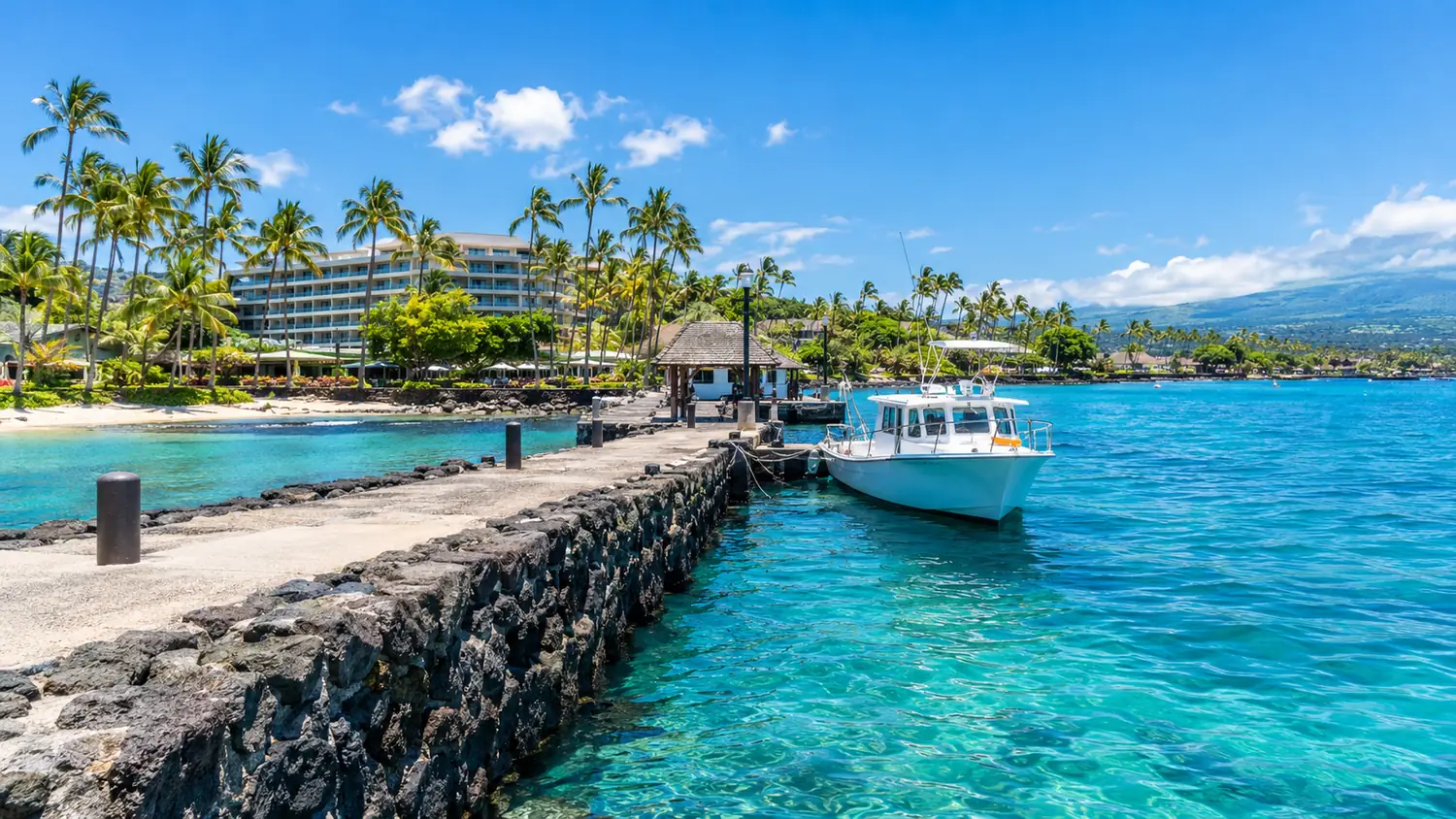
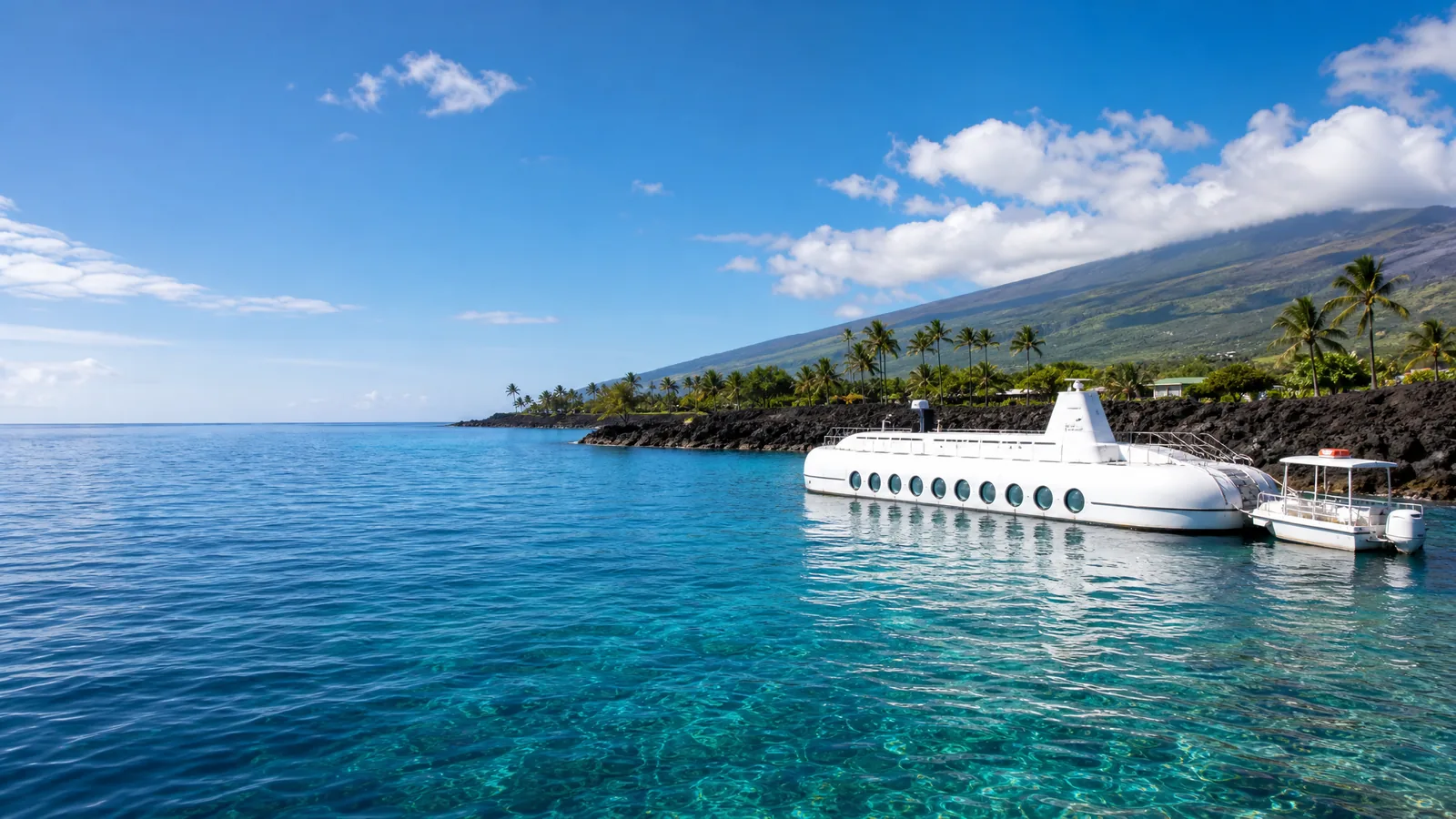
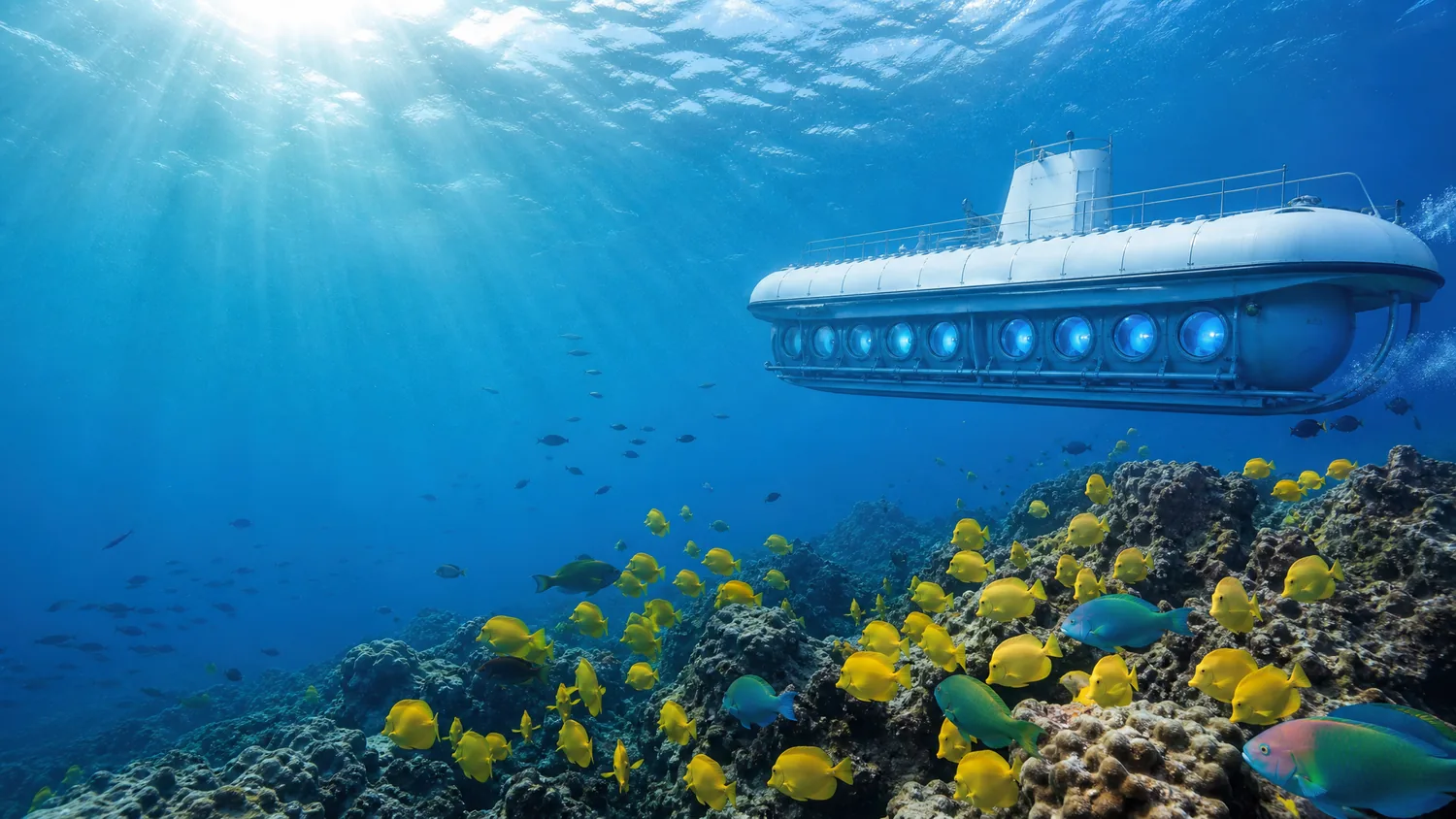
The Kona dive takes place in Kailua Bay, a few minutes offshore from the pier. The submarine sinks to around 100 feet and cruises slowly over a natural reef formed on an old lava flow, past two sunken boats and over open sand, while the crew points out what swims by.
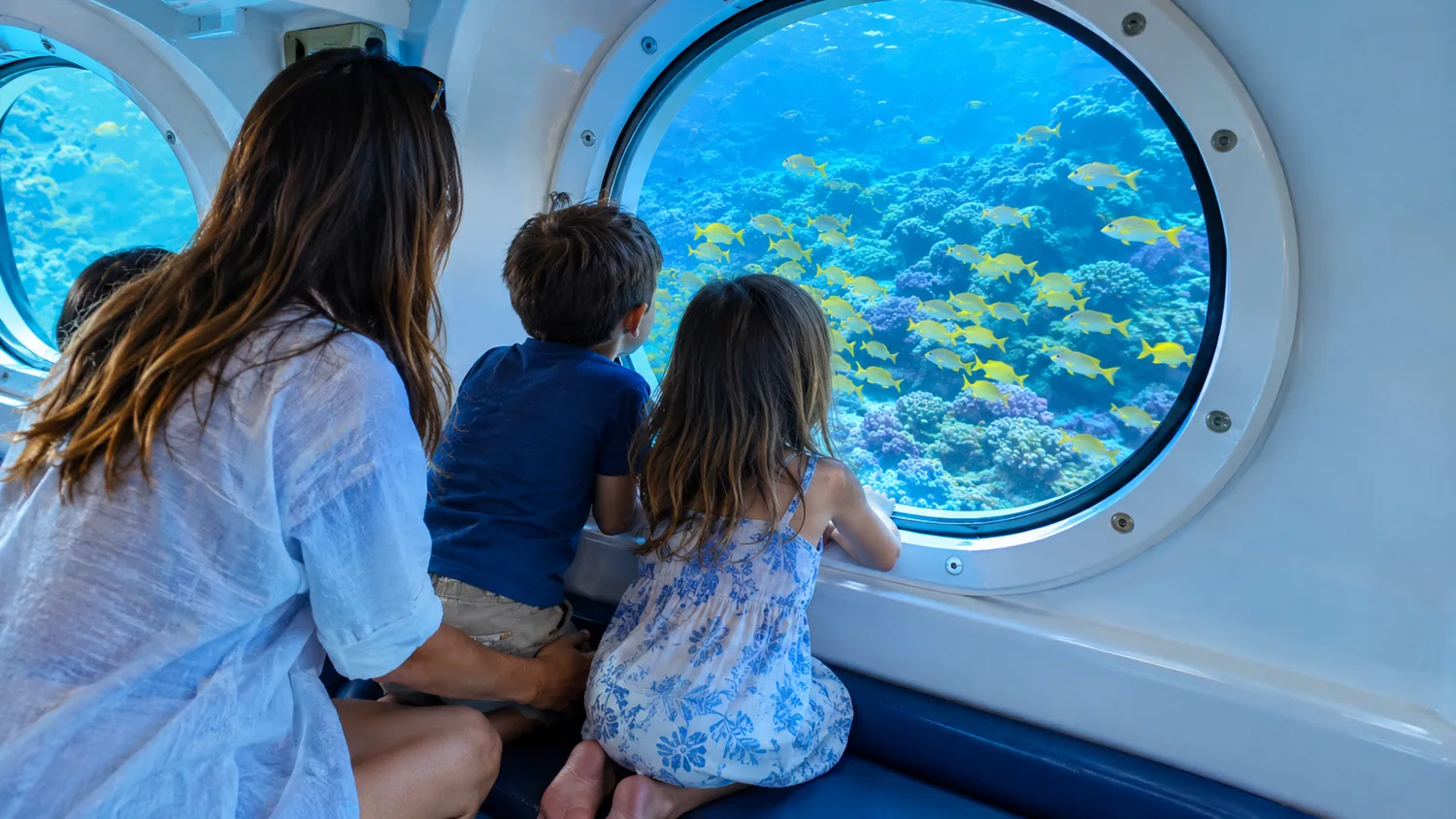
What people remember most is the fish at the windows and the wrecks. What surprises some of them is the colour, so that is covered honestly below.
The quick answer
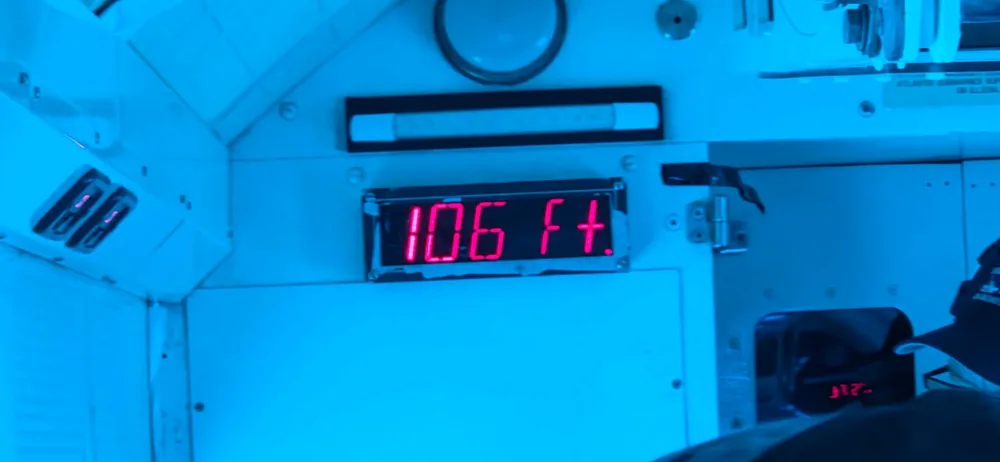
The submarine dives to about 100 feet: guests photograph the depth gauge reading 104 to 107 feet. You cruise over a 25-acre lava-rock reef, described as about 18,000 years old, and past two sunken boats. Expect tangs, parrotfish, triggerfish, eels and urchins; a shark or turtle is possible but not promised. At that depth the red light has gone, so the reef looks blue and grey rather than rainbow-coloured.
How deep does the Kona submarine go?
To about 100 feet (30 metres), which is the depth every source gives; guests report the gauge reading 104, 105 and 107 feet, and one reviewer 115 feet.
A digital gauge in the cabin shows the depth throughout the dive, and it is one of the most photographed things on board. At that depth there is no swell, so the ride is steady even when the surface is choppy.
Want to see the gauge pass 100 feet yourself? Check your date for the Kona dive.
Check dates for the Kona submarineWhat is the reef like?
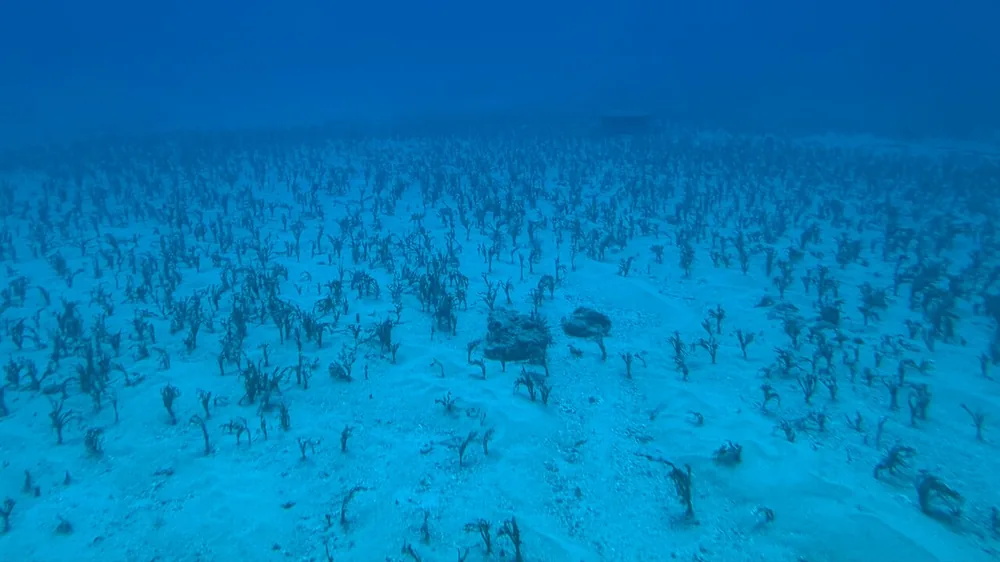
A natural reef of about 25 acres in Kailua Bay, grown on an ancient lava flow and described as some 18,000 years old.
It is lava rock with hard corals growing on it, with channels of sand and patches of seagrass between them. It is not a wall of soft, colourful coral: think of a rocky landscape with fish living in every crack.
Are there shipwrecks?
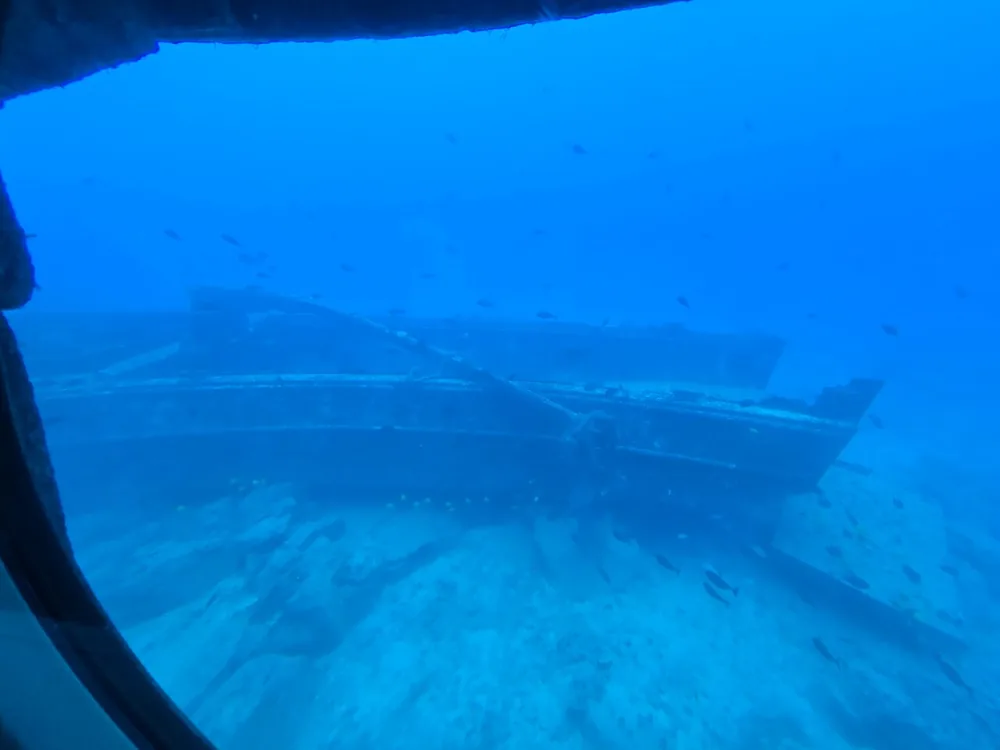
Yes, guests consistently report two sunken boats on the route, sitting on the sand near the reef.
Atlantis does not publish their names, so we do not either. They are small vessels rather than a big ship, but they are a highlight for many guests, and children in particular talk about them afterwards.
Which fish will you see?
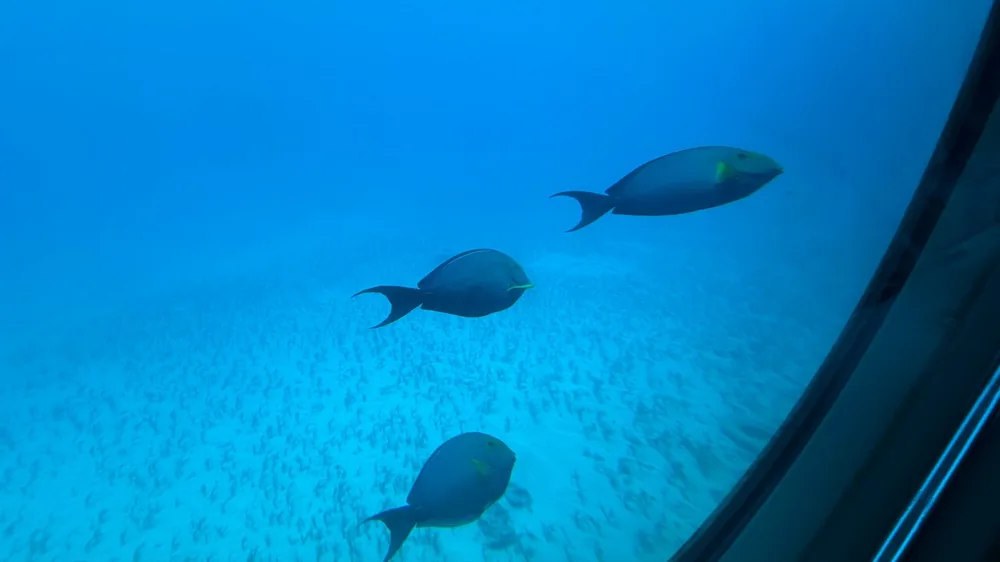
Reef fish are the main event: yellow tang, parrotfish, triggerfish, barracuda and eels are the ones named most, and guests also mention puffers, sea urchins and moray eels.
Numbers vary from dive to dive. Many reviewers describe fish swimming right up to the windows; a few say they saw only small fish and little coral. The crew narrates as you go, so you learn what you are looking at.
Why does the coral look grey or blue?
Because seawater absorbs red light within the first 15 to 30 feet or so, and at 100 feet reds, oranges and yellows barely reach the reef.
The result is a blue-grey world. One September 2026 guest wrote that she saw many kinds of fish and coral, but was disappointed that the corals were "all black or grey because of the lack of light", having expected the colours from the advertising. If bright coral is what you want, the shallow reef is where it lives: a snorkel in Kealakekua Bay shows far more colour.
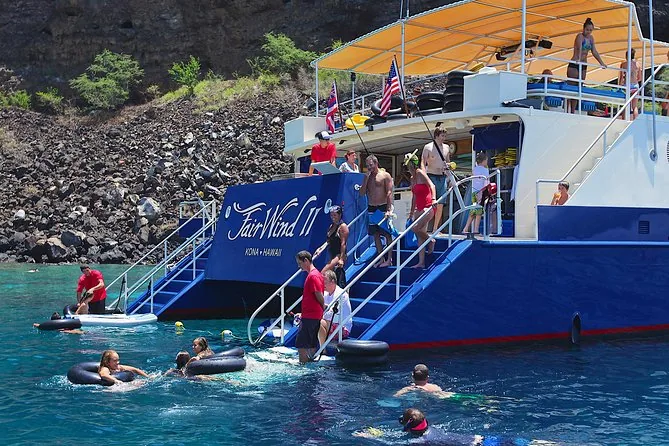
Chasing colour? A morning snorkel in Kealakekua Bay puts you in shallow water where the reds and yellows survive.
Explore the Kealakekua Bay snorkel cruiseWhat might you see if you are lucky?
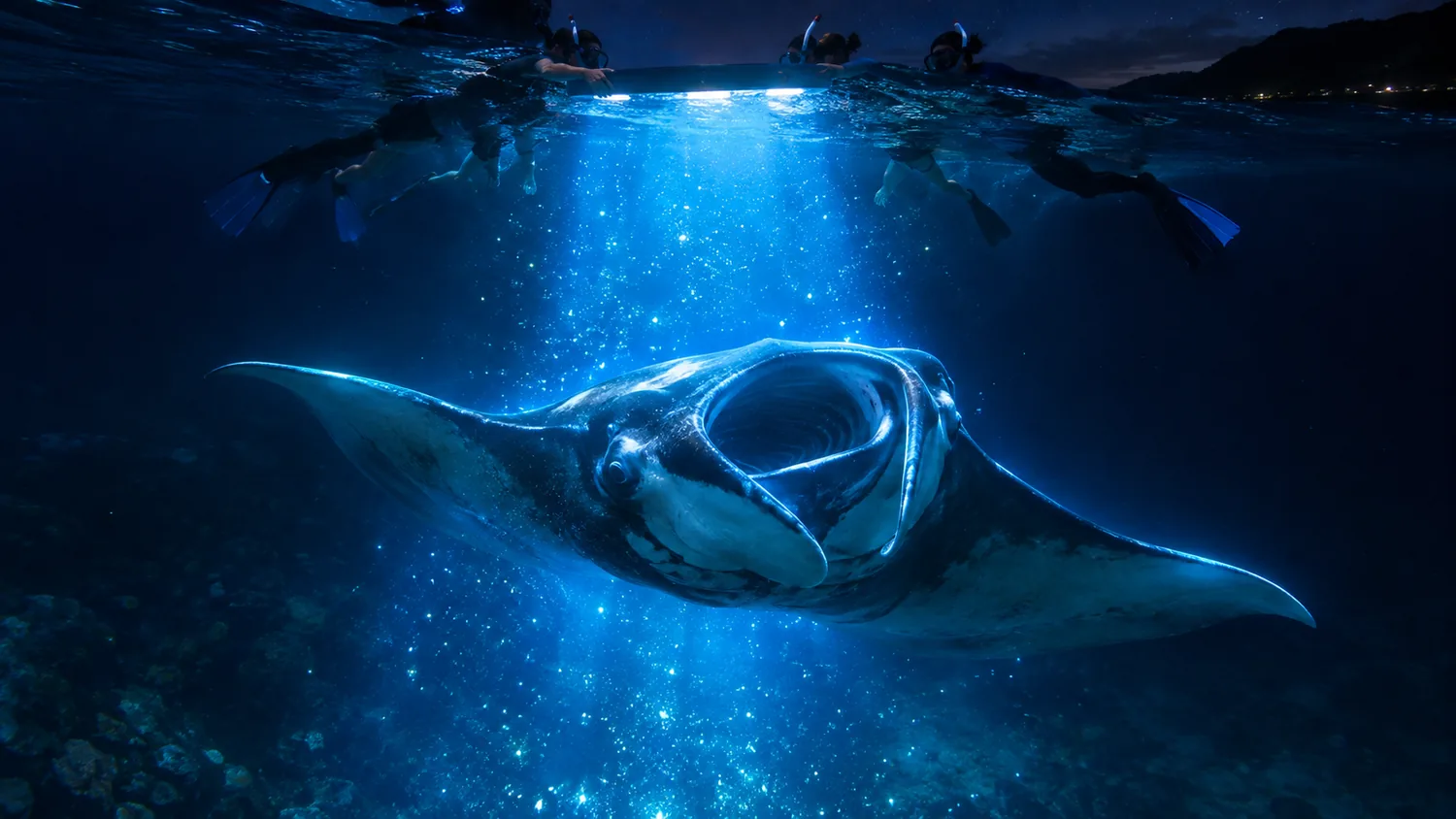
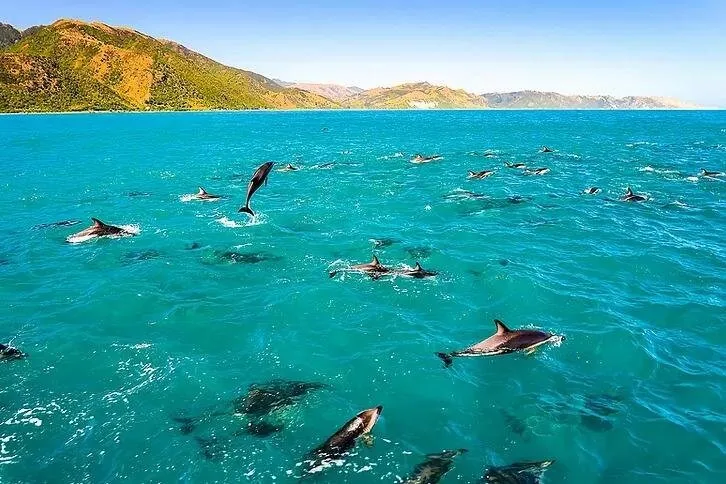
A shark, a sea turtle or a ray are occasional sightings, and dolphins are sometimes seen from the shuttle boat.
Guests report a small shark, a turtle and, on the ride out, dolphins. In winter (roughly December to March) humpback whales are off the Kona coast and may be seen from the shuttle. None of this is guaranteed: wild animals come and go.
Can you take photos through the porthole?
Yes, but expect blue, soft pictures: the light is low and you are shooting through a thick window.
Turn off the flash, hold the phone close to the window to cut reflections, and try video, which often copes better than stills. Then put the phone down for a while: the view is better than the photos.
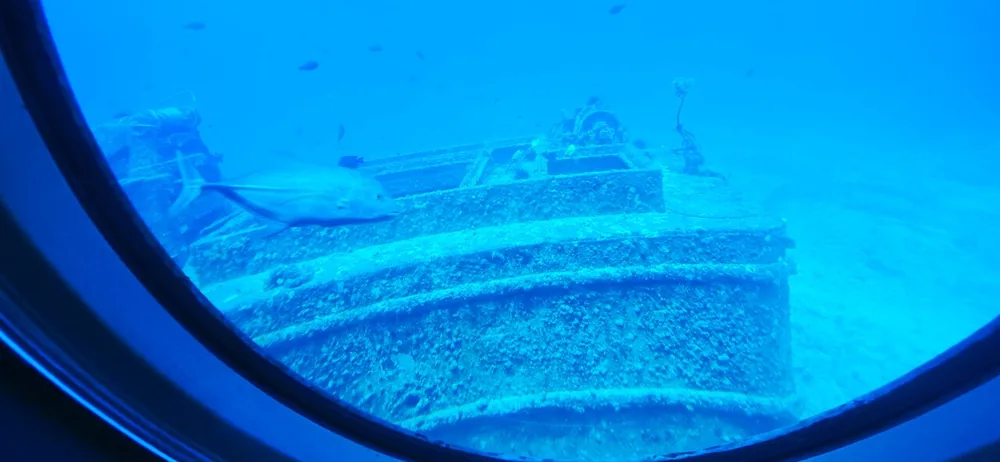
What does the dive feel like?
Quiet, cool and calm: the cabin is air-conditioned, the submarine moves slowly, and there is no motion at depth.
You sit on a long bench, back to back with the passengers opposite, each facing your own round porthole. One guest mentions music playing on the way down and up. If you are weighing up the price, see is the Kona submarine worth it?
Curious what 100 feet really looks like? Check dates for the 45-minute dive.
Check dates for the Kona submarineFrequently asked questions
Is the Kona submarine reef colourful?
Less than the adverts suggest. At about 100 feet the red light is gone, so coral looks blue, grey or black. The fish, the wrecks and the depth are the draw, not bright coral.
How many shipwrecks does the Kona submarine visit?
Guests report two sunken boats on the route. Their names are not published.
Will I see a shark or a turtle from the submarine?
Maybe. Guests report occasional small sharks and turtles, but no sighting is guaranteed.
How long is the submarine underwater?
About 45 minutes, plus a 5-minute shuttle boat ride each way from Kailua Pier.
Ready to book
Choose your dive
Free cancellation up to 24 hours before on every option. Prices are from-prices in USD and move with the season.
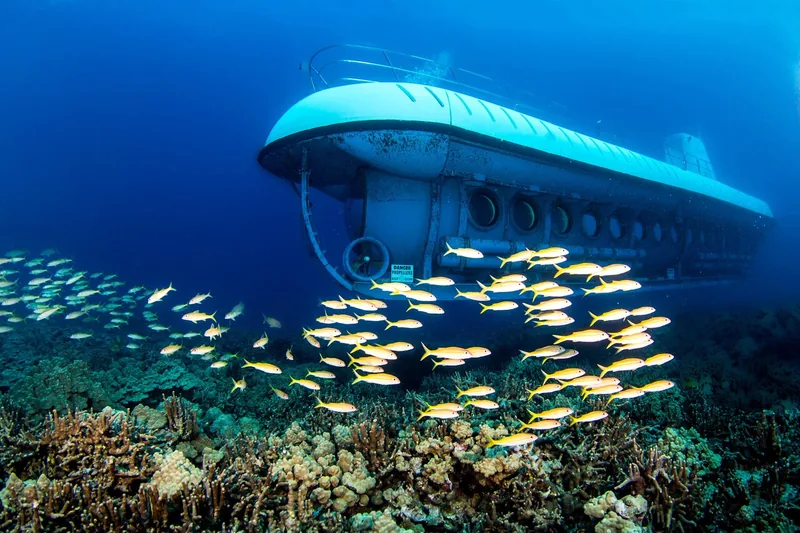
Atlantis Kona Submarine Adventure
- Sightseeing shuttle boat from Kailua Pier to the dive site, about 5 minutes each way
- About 45 minutes underwater in the 48-passenger submarine, down to roughly 100 feet
- Live English narration by the naturalist; audio in Japanese, Mandarin, Spanish and Korean
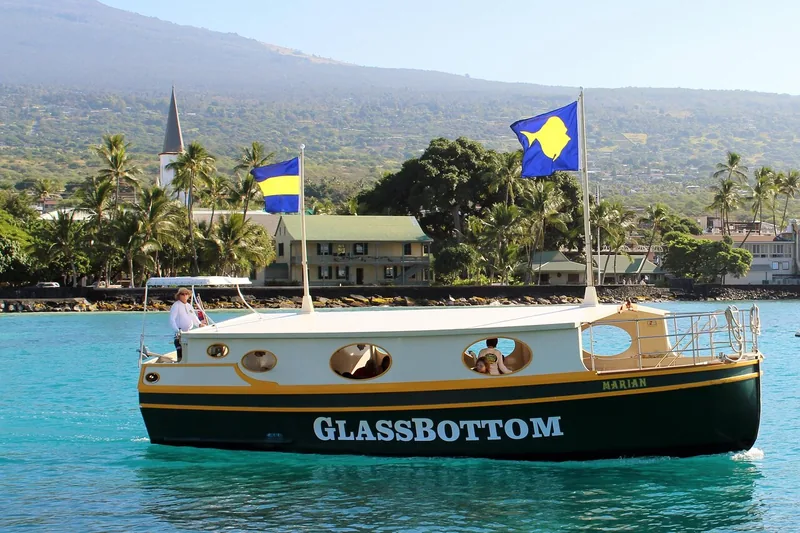
Kona Glass-Bottom Boat Reef Tour
- 50-minute cruise on a 36-foot glass-bottom boat over the Kailua Bay reef
- Live commentary from a naturalist guide
- Water, soda and ginger ale, and a restroom on board
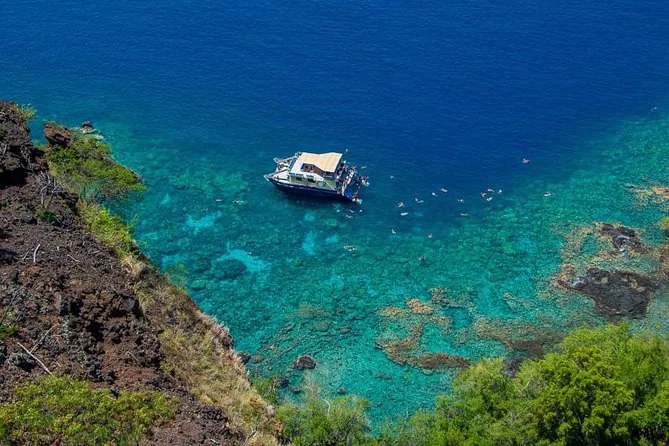
Kealakekua Bay Morning Snorkel Cruise
The brightest reef colours, about 2.5 hours in the water